Signs › W – Vessels of stone and earthenware
W25
𓏎
- Unicode
- U+133CE 𓏎
- Reading
- ꞽn(ꞽ)
- Use
- Phonemogram
- Group
- W – Vessels of stone and earthenware
- Sign list
- Gardiner, Egyptian Grammar
Description
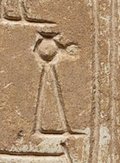
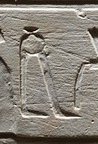
A round vessel with an upstanding rim (W24), on top of long legs in a walking posture, feet orientated towards the reading direction.
Words written with W25
| 𓏎𓈖 | jni̯ to bring; to bring away; to buy Early Dynastic Period – Roman Period |
| 𓏎𓈖𓏌𓅱𓏛𓏥 | jn.w gifts; produce; tribute Early Dynastic Period – Roman Period |
| 𓂞𓏏𓏎𓈖𓏏𓏲 | rḏi̯ (jnt) to have (sth.) brought (=to send) Old Kingdom – Ptolemaic Period |
| 𓏎𓈖𓎛𓁷𓂋𓏏𓈐𓅆 | Jn-ḥr.t Onuris Old Kingdom – Roman Period |
| 𓇋𓏎𓈖𓏌𓅱 | jn.w messenger; supplier; bearer Old Kingdom – Ptolemaic Period |
| 𓏎𓈖𓏏𓂋𓂧𓂾 | jn.t-rd remove the footprint (rituell) Old Kingdom |
Examples